
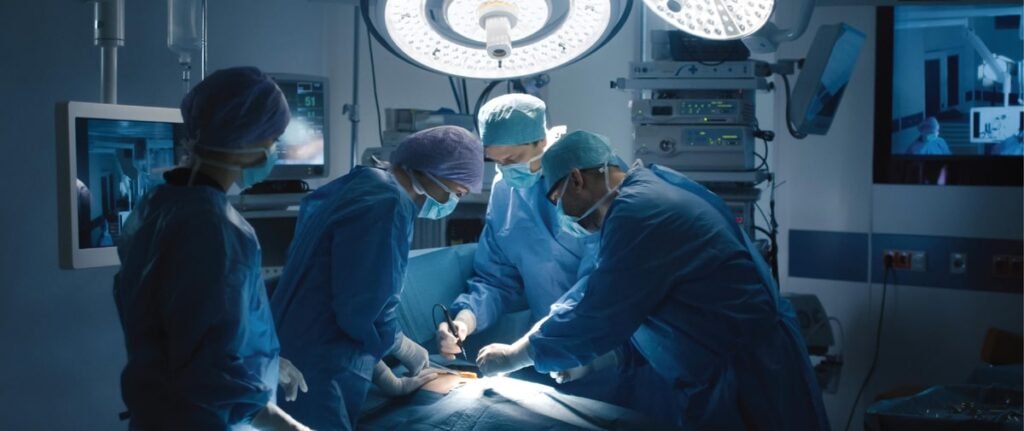
In the medical world, technological advancements consistently move toward improving treatment quality and reducing surgical risks. One of the most transformative innovations in cardiology is Minimally Invasive Cardiac Surgery (MICS)—a modern alternative to traditional open-heart surgery that requires large incisions. MICS enables surgeons to operate on the heart with minimal trauma and significantly fewer complications. But what exactly does this technique involve, and how are emerging technologies shaping its future?
What Is Minimally Invasive Cardiac Surgery?
Minimally invasive cardiac surgery is a modern surgical approach in which, instead of creating a large incision across the chest, surgeons use smaller incisions and advanced techniques to access the heart. This method results in reduced pain, shorter recovery time, and a lower risk of infection compared to conventional open-heart surgery.
Advanced Technologies in Minimally Invasive Cardiac Surgery
1. Robotic-Assisted Surgery
Robotic systems such as the da Vinci Surgical System offer unmatched precision in cardiac procedures. These systems allow surgeons to perform highly accurate movements using mechanical arms and advanced cameras, enabling smaller and more precise incisions than traditional methods.
2. Smart Catheters and Image-Guided Navigation
In some minimally invasive procedures, advanced catheters are guided through the arteries to reach the heart. When combined with 3D imaging systems and electromagnetic navigation, these technologies enable safe and accurate treatment of conditions such as coronary blockages or congenital heart defects.
3. 3D Printing for Surgical Planning
With 3D printing technology, physicians can create highly accurate models of a patient’s heart prior to surgery. These personalized anatomical models play a crucial role in pre-operative planning, reducing surgical risks and enhancing procedural precision.
4. Next-Generation Cardiac Prostheses and Artificial Valves
Modern artificial valves—such as Transcatheter Aortic Valve Replacement (TAVR) devices—have revolutionized treatment for high-risk patients. These valves can be implanted via catheter rather than through open-heart surgery, offering a safer and less invasive solution for many individuals.
Benefits of Minimally Invasive Cardiac Surgery
-
Reduced postoperative complications: Smaller incisions lead to lower risks of infection and bleeding.
-
Shorter recovery time: Patients can return to daily activities more quickly.
-
Less pain and discomfort: Minimal incisions significantly reduce postoperative pain.
-
Improved cosmetic outcomes: Absence of large chest scars enhances aesthetic results.
The Future of Minimally Invasive Cardiac Surgery
As medical technology rapidly evolves, cardiac surgery continues to shift toward more precise, less invasive, and safer techniques. Artificial intelligence, machine learning, and biometric data analysis will enhance surgical decision-making and enable personalized treatment plans. Additionally, the integration of nanotechnology and regenerative medicine may one day allow for the creation of new cardiac tissues to replace damaged areas of the heart.
Conclusion
Minimally invasive cardiac surgery represents a major breakthrough in the treatment of heart diseases. With the support of cutting-edge technologies, it allows patients to undergo life-saving procedures with minimal pain and reduced risk. The future of this field shines brighter than ever, promising even greater advancements driven by smart technologies and innovative medical solutions.